 Thanks so much for coming in,” says the waiter as he leaves the check on the table. I make note of the total and do the math in my head to figure out the tip. Tipping is an everyday occurrence in restaurants and diners around the country, but one that has come under scrutiny of late – when to tip, how much to tip, and whether the requests to tip have gone too far? In today’s economy, where many feel they are already being nickel-and-dimed, the added burden of excessive gratuity requests is edging consumers to a
tipping point.
WHERE IT ALL BEGAN
Tipping, which originated in medieval times, first became prominent in the States in the mid-1800s when American travelers on European excursions discovered the tradition. Upon returning to the States, these individuals began adding a gratuity when paying a bill in an attempt to adopt a more aristocratic air. Ironically, while Europe eventually phased out the practice, the concept caught on here – but not without controversy.
Consumers have not always agreed on the practice of tipping. There’s an infamous scene in Reservoir Dogs where Mr. Pink, played by Steve Buscemi, refuses to kick in money to tip their waitress. His fellow diners argue that servers rely on tips to make a living, but Mr. Pink stands his ground that “tipping automatically is for the birds.” Eventually, he is pressured into adding his money to the table, but he’s not happy about it.
TIP CREEP
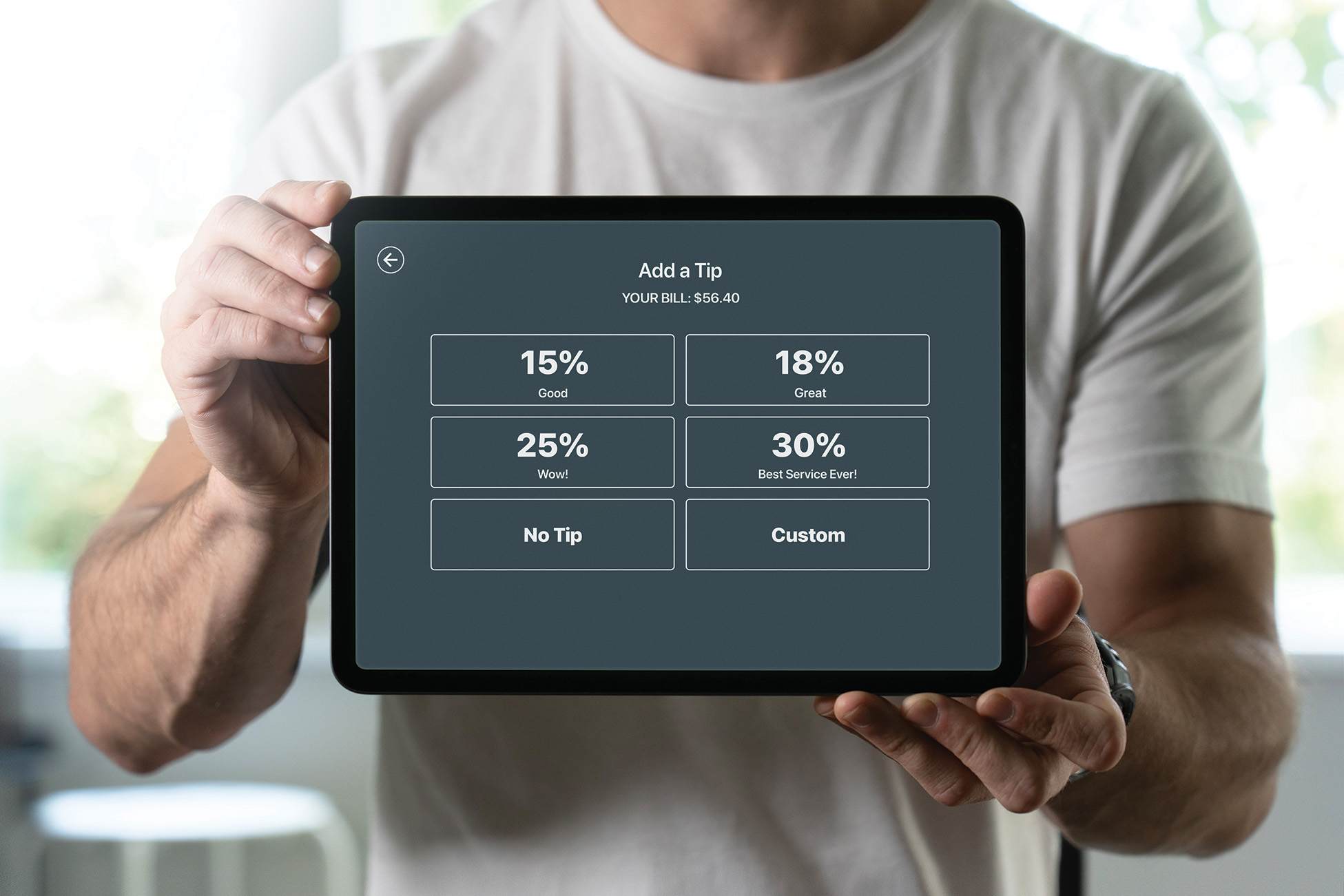
Fast forward to the Covid-19 pandemic, when tipping took on a whole new energy. People generously tipped food delivery people and other food service employees who continued to work despite the health risks. Tipping was an honorable gesture – a way to help restaurants stay afloat. Now, a few years post-pandemic, tipping culture has continued to expand. Kiosk and tablet check-out systems that originally emerged to streamline contactless payment are more prominent than ever. Some customers resent the preset tip suggestions and remark that this very public action of tipping – or not tipping – makes them uncomfortable.
Opportunities to tip, or being asked to tip, have also expanded and have become another point of customer contention. Should you have to tip for a take-out or self-serve purchase? People who are typically generous are feeling the financial squeeze. Faced with more and more opportunities to tip for a wider range of services – what’s being labeled as tip creep – consumers are pushing back, but at what cost to employees who rely on that extra money to survive?
 WHAT’S AT STAKE…
What was once a question of etiquette is becoming, for many Americans, a question of affordability. The current rise in the cost of living, paired with an uncertain economy, hasn’t helped matters. People feel monetarily stretched thin. While this is understandable, it is important to keep in mind that many workers – especially those in service industries, think waitstaff, bartenders, parking attendants, Uber drivers – rely on tips in order to earn a living wage. What started as a way to elevate the status of 19th-century aristocrats soon became a way to influence wages. Beginning in 1938, employers were only required to pay tipped workers a wage that would add up to the federal minimum wage when combined with tips. Until the practice of paying service workers less than minimum wage is phased out, tipping isn’t going anywhere. Ideally, there will be a shift in how employers pay their workers, but that won’t happen overnight.
So, what is a consumer to do? Money experts agree that the standard minimum tip remains at 20% for service provided in restaurants and bars, with the option to give more if the customer feels the service exceeded expectations. But what about counter service or to-go orders? Here, the answer gets a little murky. The bottom line, is that while a tip isn’t necessary in these occasions, if a customer is financially able to, a small tip is appreciated.
When it comes to tipping, give the amount you can when you can – don’t be Mr. Pink. •
