Parenting is fraught with all kinds of important decisions, but selecting the right school for your child is probably one of the most significant. The choice between public and private education is one that some parents wrestle with. In an area like Fairfield County where the public school systems are very well-rated, what factors would sway parents to the private school sector?
Private schools, such as Ridgefield Academy, (RA), which serves students preschool through 8th grade, are driven by clear missions and educational philosophies intentionally designed to support student growth. “Our students have the opportunity to engage deeply in a wide range of subjects to discover their interests and develop into well-rounded learners,” says David Suter, RA Associate Head of School and Director of Enrollment.
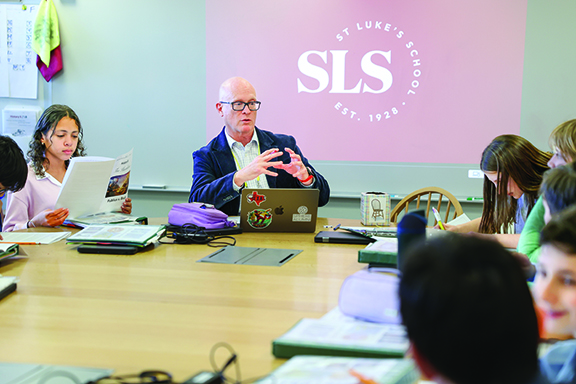
According to Jason Giffen, Director of Enrollment Management at St. Luke’s School (SLS) in New Canaan, “Parents should strive to find the educational environment where their children feel a sense of connection and where they are known and valued.”
Connection is often more easily facilitated with a lower student-to-teacher ratio. One of the main appeals of private education is smaller class size, which allows for more individualized attention. “Some kids need a little more of a relationship with their teachers. The smaller scale of private school means more eyes on each student,” says Giffen. Suter agrees, “The environment at RA allows every student to develop a strong sense of belonging.”
Additionally, parents should consider the community values of the school. “Parents find kindred spirits here. We have a big service mentality; giving back is prioritized,” says Giffen.
Obviously, cost needs to be a consideration. “About 20% of our students receive financial aid,” says Giffen. Ridgefield Academy also offers aid to a similar number of students.
For parents thinking about private education, Suter suggests they take the time to explore different schools. “The best school for your child is the one that aligns with your family’s values and supports your child’s unique journey,” she says. Students graduating from private schools often feed directly into well-respected colleges and universities. While securing a spot at one of these schools is desirable, Giffen says that shouldn’t be the end goal. “Here at SLS, it isn’t just about getting into college but preparing our students to be successful when they get there.
 For some students, however, the traditional four-year college route is not the best fit, in which case, attending a trade or tech high school or trade school after high school is an excellent option.
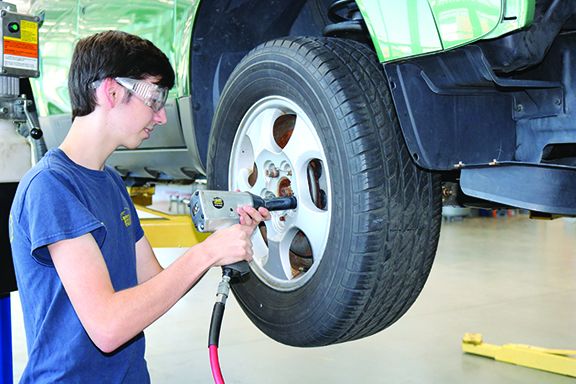
Henry Abbott Technical High School in Danbury, a public high school within the Connecticut Technical Education and Career System, offers a unique educational model for students looking to explore options in the trade and tech fields. Admission to Henry Abbott is lottery-based, and tuition for all students is free of charge. The school runs on a standard 182-day school year, but where it differs from a comprehensive high school is that the school year is divided into two sections: an academic one and a trade one. During the trade cycle, students are engaged in their trade of choice in a hands-on, small-class setting taught by a skilled tradesperson. “What students and parents love most about our school is the relationship with their trade teacher that is unique. It is almost like a family, and it really defines the climate of the school,” says Mike Crocco, Superintendent of Schools for the Connecticut Technical Education and Career System.
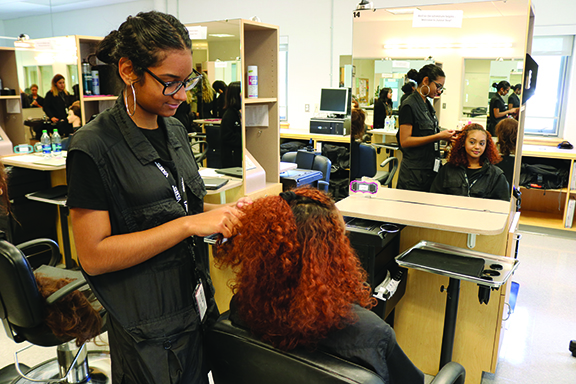 Historically, trade or tech schools have been viewed as second or lesser options for post-high-school education. Scott Shaw of Lincoln Tech, which has Connecticut campuses in Shelton, New Britain, and East Windsor, says that trend is definitely shifting. “Students are reevaluating what they want to do. They don’t necessarily want to be stuck behind a desk but rather want to make an impact by fixing or building something,” says Shaw. Lincoln Tech offers one-year programs of study taught in 5-week subject blocks, from HVAC and Automotive Technology to Medical Assistants and Computer Networking. “We are seeing a skills gap – not enough people know the trades. Lincoln Tech aims to close that,” says Shaw.
Employment is the goal of any graduate, whether it is a four-year college or tech school. An associate or bachelor’s degree definitely opens doors for new graduates, but in today’s job market, a certificate from a trade or tech school is also a pathway to finding work. “These students are gaining real-world experience,” says Crocco. “Our connection to industries in the area translates to employment potential.” Lincoln Tech graduate Paul Evangelista agrees, “I was able to learn more through Lincoln Tech with their trade-proven instructors and hands-on teaching methods than I had with over a decade of field work. I now work on cutting-edge submarines for the Navy.”
The threat of AI taking over jobs is a real fear for those entering the workforce. Trade and tech schools prepare students for relatively guaranteed positions that aren’t going anywhere. “AI can’t take these jobs. Maybe it can help diagnose problems or offer suggestions, but these jobs require a person to get the actual work done,” says Shaw.
Parents and students need to collaborate to determine the best educational path, with the knowledge that there isn’t a one-size-fits-all solution. “There’s never been more educational options out there. That’s the power of school choice,” says Giffen. •
