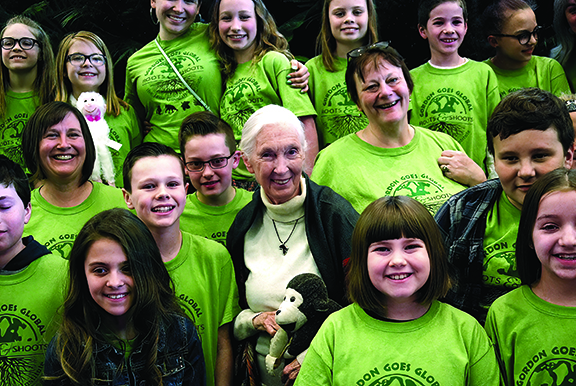
 Dr. Jane Goodall with members of the Gordon Roots & Shoots group from Michigan during the 2019 Chicago Roots & Shoots Showcase. CREDIT: JGI/ Mary Paris
Jane Goodall, the renowned ethologist and conservationist, is best known for her groundbreaking research on chimpanzees. What many people may not realize, however, is her strong connection to Connecticut’s 068 area.
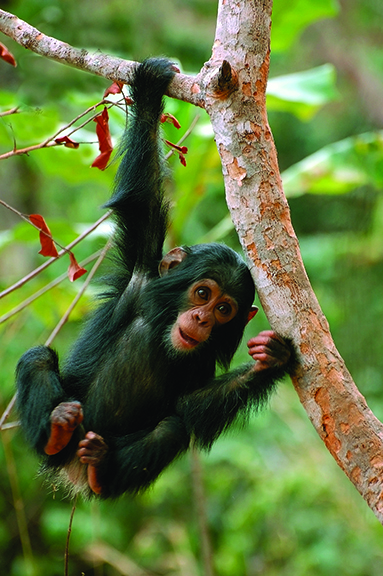 Chimpanzee Tabora swings from a branch in Gombe National Park. CREDIT: JGI/Rob Sassor
Jane spent decades at Gombe National Park in Tanzania, where her pioneering research transformed our understanding of chimpanzees and their close relationship to humans. As she learned about the threats facing chimpanzees, her focus shifted from research to advocacy. In 1977, she founded the Jane Goodall Institute (JGI) in San Francisco, California, which evolved into a global network of JGI offices to support her core dreams and inspire and engage others in conservation and humanitarian efforts. The institute reflects her enduring belief that individual actions can create meaningful change. As Goodall often said, “Focus on a life of hope, purpose, and the power of individual action to make your difference in the world.”
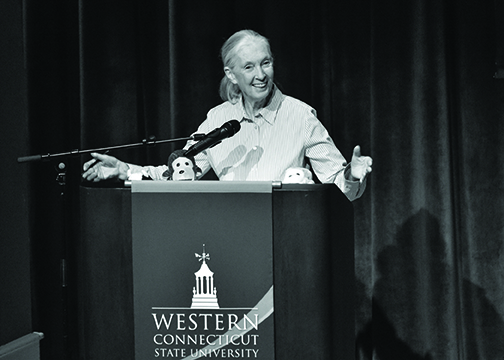 In the early 1990s, Goodall expanded her mission by focusing on young people. She launched her Roots & Shoots youth program, establishing its first U.S. base at 245 Main Street in Ridgefield. Seeking a partnership with an urban university, she found the ideal collaborator in Western Connecticut State University (WCSU) in Danbury. For more than a decade, Ridgefield and WCSU served as the national headquarters for Roots & Shoots USA, allowing many local residents to work closely with one of the world’s most respected conservationists.
In return for housing the program, Goodall committed to visiting the university regularly, delivering at least one major public events each year, and supporting satellite programs in the region.
Danbury appealed to Goodall because of its many opportunities for young people to make a difference. The community offered cultural centers, churches, nursing homes, food pantries, and soup kitchens such as Dorothy Day Hospitality House, along with innovative schools, mental health and special-needs organizations, open spaces, waterways, and animal rescue facilities.
Through Roots & Shoots, Goodall helped schools establish peace gardens, tree-planting initiatives, clean water projects, and programs that connected students with adults. At WCSU, she supported grant writing, organized conservation summits, and helped design the university’s first permagarden. She strengthened participation in Day of Service activities, Earth Day, the International Day of Peace, and Respect for Animals Day. Goodall also launched several community initiatives. At the Federal Correctional Institution in Danbury, she established a gardening program in which inmates grew much of the food they consumed.
During her years at WCSU, the Roots & Shoots program grew from just a dozen student clubs to more than 250 clubs across the United States. Each club was encouraged to identify its own priorities and develop projects tailored to its community. The guiding principle was simple: every project should improve the lives of people, animals, and the environment.
While traveling nearly 300 days each year, Goodall inspired audiences around the globe, raised funding to support these initiatives, taught leadership skills, and organized international youth symposiums.
Goodall also mentored many outstanding leaders from the region. Dr. Rick Asselta, a teacher at Alternative Center for Excellence, worked with his students to raise money for crutches and wheelchairs for a Special Olympics program in Tanzania. He continued developing innovative educational programs after relocating to Puerto Rico.
Dr. Laurie Weinstein, an anthropology professor at WCSU, helped establish permagardens on campus. She later joined the University of Ottawa, where she expanded these sustainability initiatives internationally.
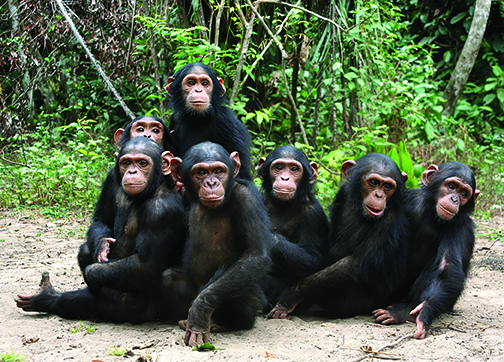 Orphan chimps at the JGI Tchimpounga Chimpanzee Rehabilitation Center in the Republic of the Congo CREDIT: JGI/Fernando Turmo
I had the opportunity to volunteer in Tanzania along with Mei-Ling Uliasz, a teacher from Bethel. Together, we facilitated literacy programs that also emphasized recycling and creating products to sell for school supplies. Inspired by the experience, Uliasz introduced recycling initiatives in her own schools and now organizes an annual “Trashion” Show that raises money for schools in Africa.
I’ve continued my commitment to education by creating school-based Alzheimer’s and dementia awareness programs and developing an initiative empowering women through history. In these presentations, I portray influential historical women and lead discussions about their lives, achievements, and lasting impact.
When Goodall passed away in October 2025, the WCSU community honored her remarkable legacy. To further celebrate her life and work, a documentary titled Dar es Salaam to Danbury will be released soon. (see Below).
Jane Goodall had a unique ability to illuminate both the challenges facing our world and the power everyone possesses to make a difference. Those who worked alongside her describe her optimism and compassion as contagious. As someone who was inspired by Jane, I can attest that we can all be inspired to make the world a better place. •
