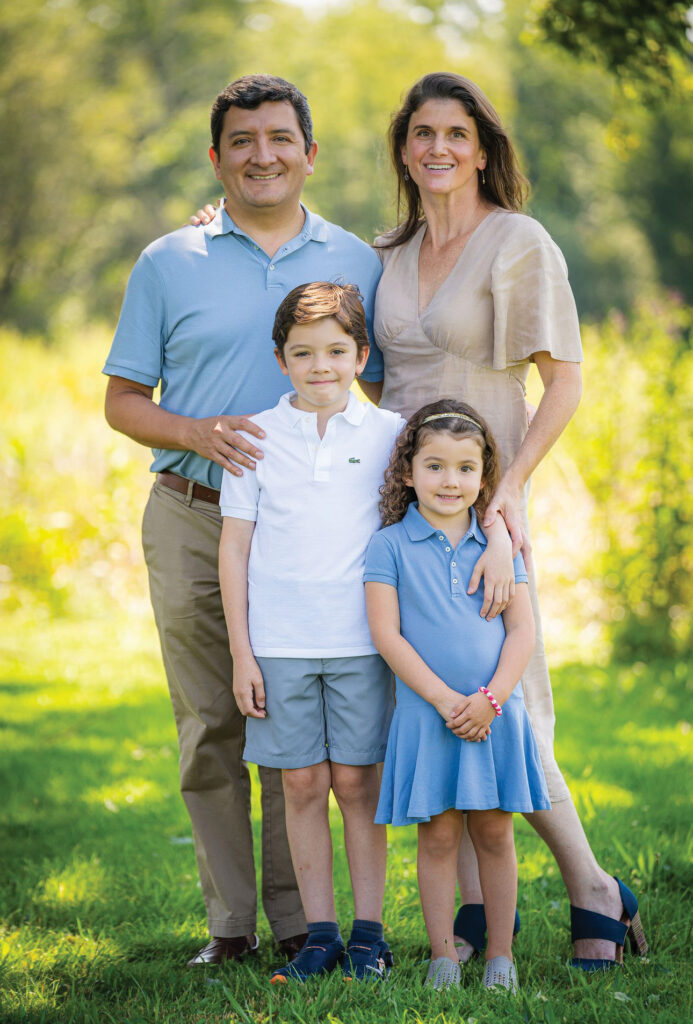
 Pregnancy and delivery should be a blissful time, but for women who are classified as high-risk, the experience can be fraught with anxiety and fear. Ridgefield residents Brittney Crystal and Jose Aleman know this firsthand. Although Brittney’s first pregnancy was high-risk, she delivered a healthy boy at 34 weeks. However, with her second pregnancy, despite precautions, her daughter Iris tragically passed away during an emergency C-section at 28 weeks. “Losing Iris broke our world in half,” says Brittney.
Her experience is not unique. Globally, 41,000 babies are born preterm every day. In the United States alone, every year nearly 400,000 babies are born too soon, and 21,000 are born still – the highest rate of any high-income nation. Most women who experience preterm birth have no known risk factors.
In addition to the emotional toll of losing a child, Brittney and her husband were faced with two challenging realizations: 1) there is a lack of basic understanding of how a woman’s body works during labor, and 2) the stigma and isolation around this kind of loss are crippling.
What emerged from their devastating loss was the formation of The Iris Fund, a non-profit organization dedicated to investing in research to understand pregnancy better, improving the standard of care, and advocating for support and outreach to families. “The hardest thing to learn was that we know so little about women’s bodies, but the most reassuring thing is the teams out there doing the work,” Brittany recalled.
DO THE RESEARCH
 Since its inception, The Iris Fund has become the leading private funder of basic science research related to preterm birth. “One hundred percent of life comes from fifty percent of the population. Let’s spend some time (and money) learning about that,” says Brittney. Historically, most medical research has been done with a male patient in mind. “Women’s health deserves investment in the basics: learn how a woman’s body works in pregnancy when all goes right, use that knowledge to understand what’s happening in pre-term labor, and then develop novel non-invasive techniques for tomorrow.”
The Iris Fund has partnered with leading institutions, including Columbia University, which has developed the first “digital twin” of a uterus and cervix to help understand the bio-mechanics of pregnancy and how a woman’s body will react to different scenarios. The goal is for doctors to use this model to determine if a woman is high-risk for early labor, and if so, get her the support she needs. “Everything The Iris Fund does is about scalability, updating the knowledge around women’s health and putting it out there in the public so that it is available to all,”
says Brittney.
 FUNDRAISING
Currently, only about 10% of the national health budget is devoted to women’s health, and of that, only a small portion goes to pregnancy, but Brittany says the Iris Fund is hoping to aid that. “I think targeted investments in taking better care of moms are worth it.”.
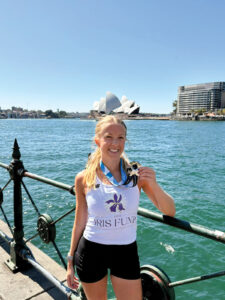
“Everyone told us we wouldn’t raise more money than in the first year,” says Brittney. “That it was a bereavement fund.” The reality is, in a little over eight years, The Iris Fund has built a dedicated community around this cause, raising over $1.9 million. Fundraisers have run marathons around the globe – from Berlin to Sydney. Cyclists have ridden in L’Etape du Tour De France. Locally, the Iris Fund is now part of the Ridgefield Road Fest, with its own Iris Fund 5K. A “last runner” is assigned and earns a $1.00 donation from CT Run CO. for every runner they pass. The Iris Fund invests this money in groundbreaking research and raising the standard of care for pregnant women across the country.

EMOTIONAL AND CLINICAL SUPPORT
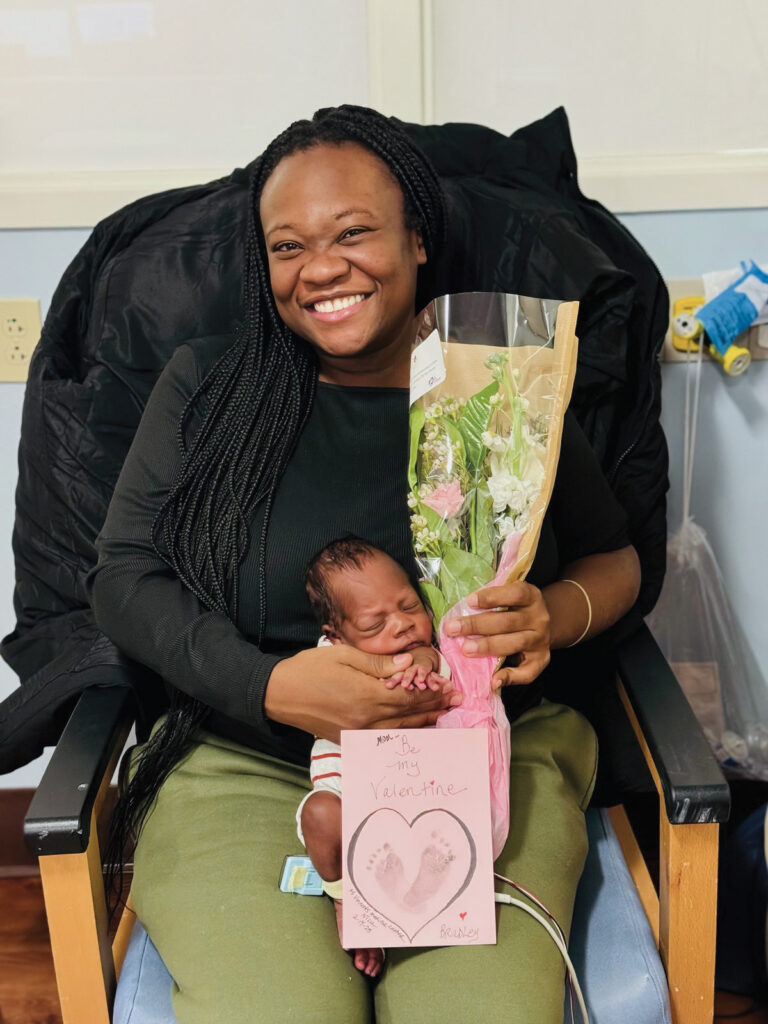
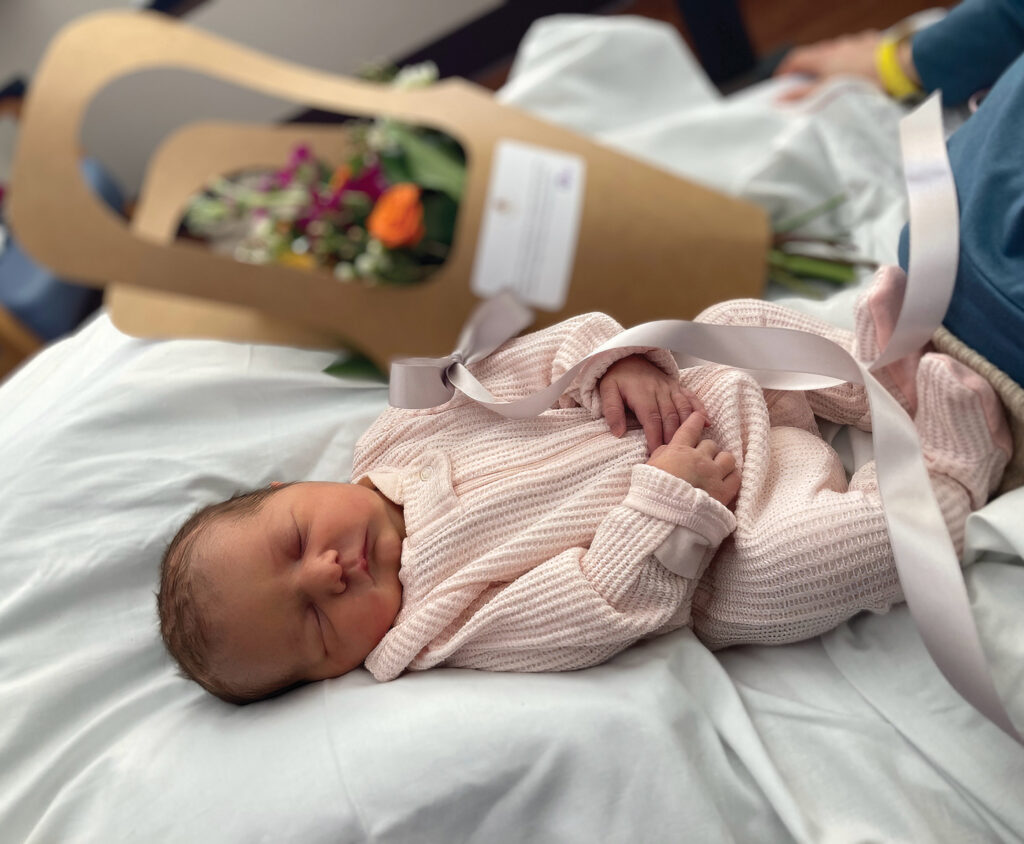
Pregnancy loss and high-risk pregnancies live in such a stigmatized place. “Generationally speaking, it isn’t a topic that was openly discussed. There isn’t really a roadmap to navigate the loss,” says Brittney, who found support reaching out to other moms. “It made me realize it wasn’t something I had to get over.” Peer mentorships have proven to be invaluable in helping women navigate the experience of preterm birth or pregnancy loss. As one of their outreach programs, The Iris Fund delivers Mother’s Day flowers to area NICUs to support moms and families.
Getting pregnant again after a preterm birth or stillbirth can be frightening. The Iris Fund is a founding partner in the US Pregnancy After Loss Network, a group started by leading maternal and fetal medicine clinicians and non-profits to share data and best practices. The group has launched three Pregnancy After Loss Clinics, which also offer practitioners sensitivity training on providing compassionate care for both high-risk pregnancies and families experiencing pregnancy after loss. “We’re hoping to accumulate data to prove that if doctors can spend a little more time, offer more frequent ultrasounds, and support mental health, we can see a decrease in the number of preterm and still births,”
says Brittney.
THE FUTURE
The Iris Fund is working toward the goal that no family endures the heartbreaking complications and loss due to prematurity and stillbirth. Brittany says, “we should be able to tell our daughters that they will have a better experience with pre- and post-natal care,” says Brittney. •
