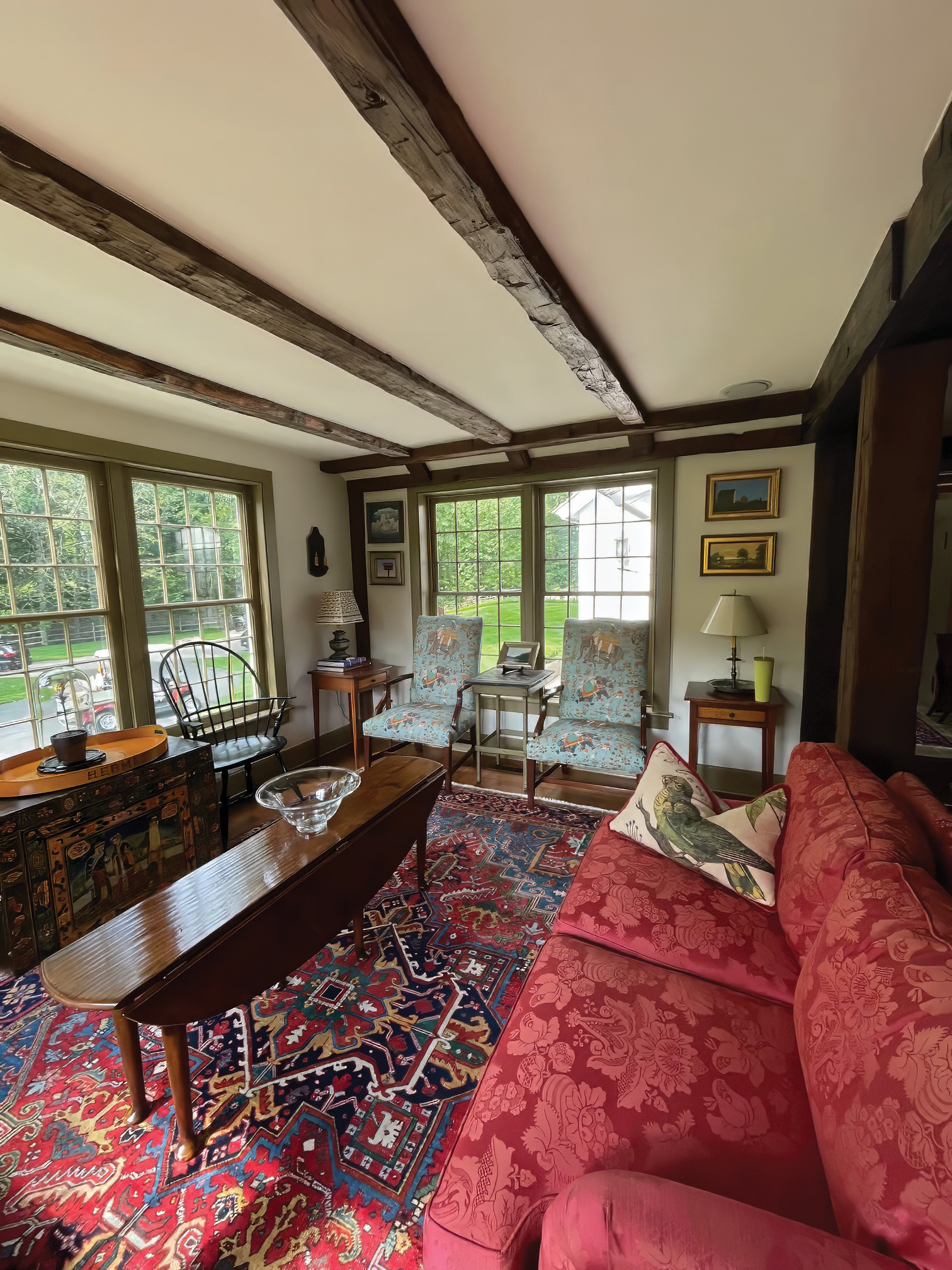
 Ben Oko, who, along with his wife Helen Dimos, lives in a 290-year-old classic center chimney colonial in Ridgefield. Uneven floors, small rooms, poor insulation, tiny closets, and high heating and repair costs are just a few of the inconveniences that homeowners of antique houses live with. “Old bones” come with a price.
The former owners of the Oko/Dimos house, built around 1735, left their mark. The original kitchen—once a fireplace large enough to walk into—is now the centerpiece of the living room and the heart of the cozy home. A later addition created a functional kitchen with windows overlooking a lawn rolling to the Titicus River. Dimos, a landscape designer, was lured by the privacy and beauty of the property, which was highlighted at the Ridgefield Historical Society garden tour. The couple joined the Ridgefield Historic District to protect the home, ensuring its façade can’t be changed or torn down without approval.
You don’t know quirky until you step inside the home owned by Colleen and Earl Flask, who call their 1760 Main Street antique “wonky.” The Flasks always held Ridgefield in their hearts after spending most of their working and family-raising years living abroad. When they purchased their house three years ago, they made a long list of desired changes—uneven floors, worn stair treads, an inefficient kitchen, and an exterior door that had a significant gap to the outside were all things that had to go.
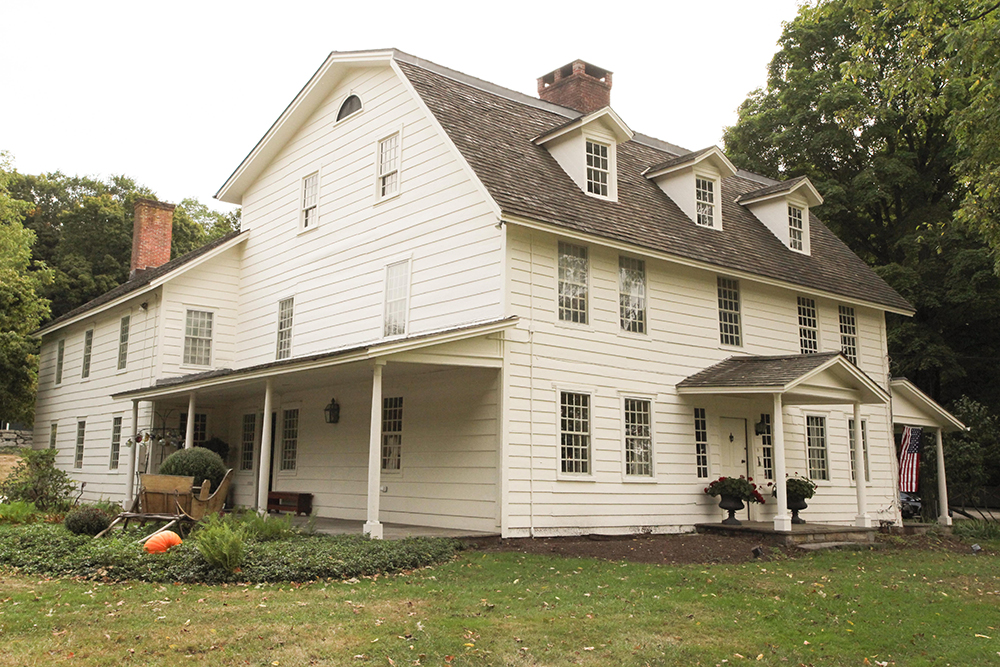 Torn by the thought that whatever they changed would be altering a part of history, they decided to start with an unsalvageable 1800s barn by repurposing as much material as possible into the new build. In the meantime, the Flasks have come to embrace the quirks and don’t plan to make any changes soon. “We love our old house,” says Colleen. “I feel nothing but embracing energy.”
Jen and Rick Wastrom landed in their late 1600s Saltbox in Redding when they drew an acceptable commuting circle around Manhattan. As their family grew, the house seemed to shrink with its one bathroom, a tiny kitchen from 1741, and little closet space. The small living room was so cluttered with toys and their Steinway piano that there was barely room to walk. They decided to move until their Realtor warned that their beautiful property might attract a buyer who could tear down the house.
The horrified couple couldn’t bear the thought, so they hired architects from Woodbury who specialized in additions for antique homes. A first-floor primary suite, additional bathrooms, expanded living space with hand-tooled beams to mirror the originals, and a small TV room offer staying power for the future without sacrificing the charm.
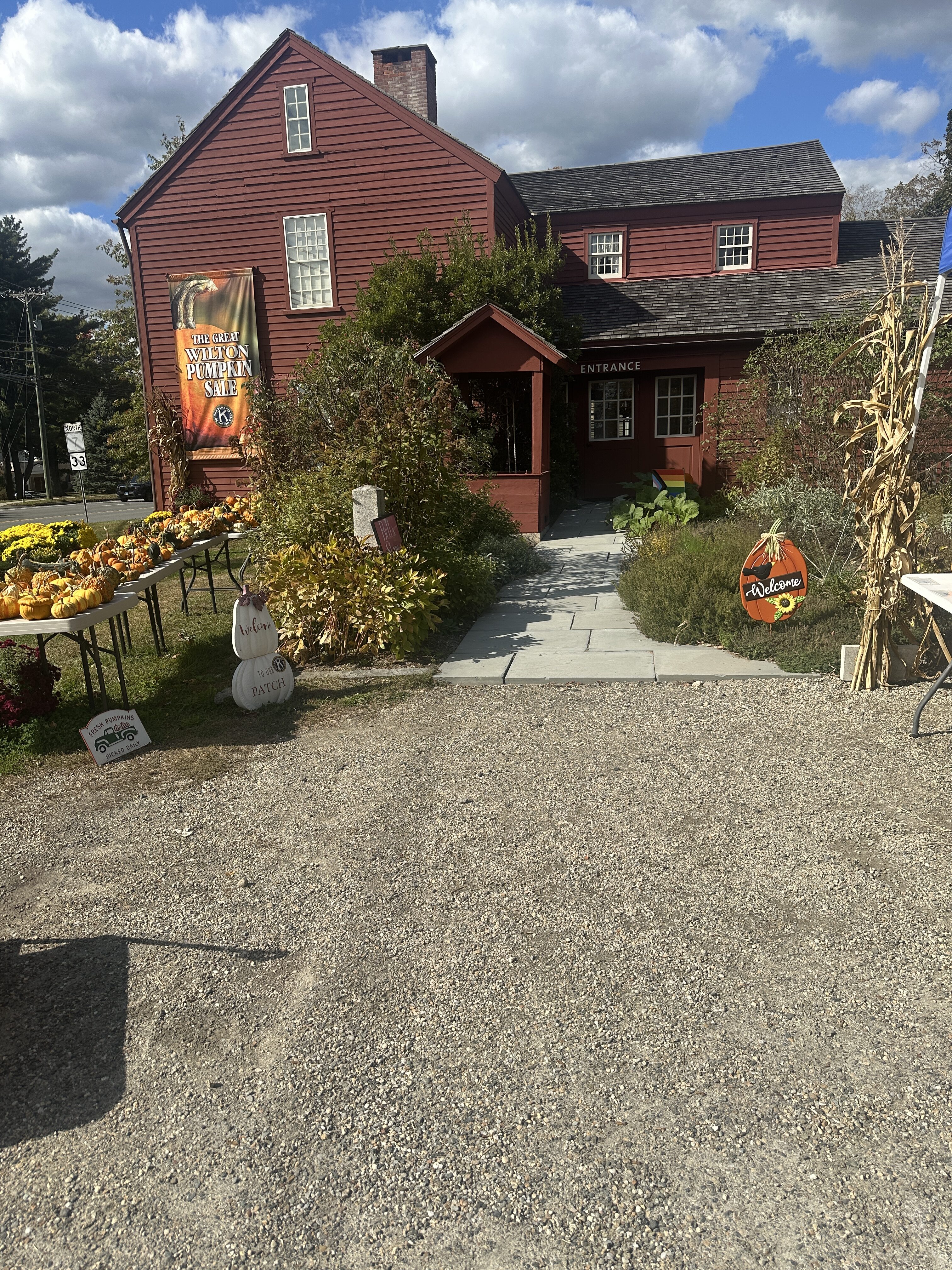
 Staying power is exactly what the Wilton Historical Society had in mind when it put its antique structures to work. Lambert house (c 1726), the oldest house in Wilton, is one of nine historic buildings repurposed as home to businesses on Lambert Corner. The 1740s Betts House and the 1770s Soan-Raymond-Fitch House are home to the Wilton Historical Society and Museum. All these buildings come with expensive challenges—energy efficiency, fragile materials that need protection, and cedar roofs that don’t last long. In some places, even ADA compliance can be a challenge. Wilton Historical Society Director Nick Foster says that preserving buildings as an educational tool for the community and for the tenants makes all the careful planning and budgeting well worth it.
Gary Singer and his wife Susie, who live in a former trading post built circa 1710, reputed to be one of the oldest structures in Ridgefield, say it is particularly challenging to appropriately insure an antique house. Homeowners need specialized insurance to cover replacement, because these old houses aren’t standardized. “If you do have a loss, you want to make sure chestnut beams are replaced with chestnut beams,” says Singer. It is also important to use craftsmen who specialize in antique and vintage homes when repair or maintenance is needed.
Bottom line, say the Singers, “You don’t just live in an old house, you are its caretakers for past and future generations.” •
