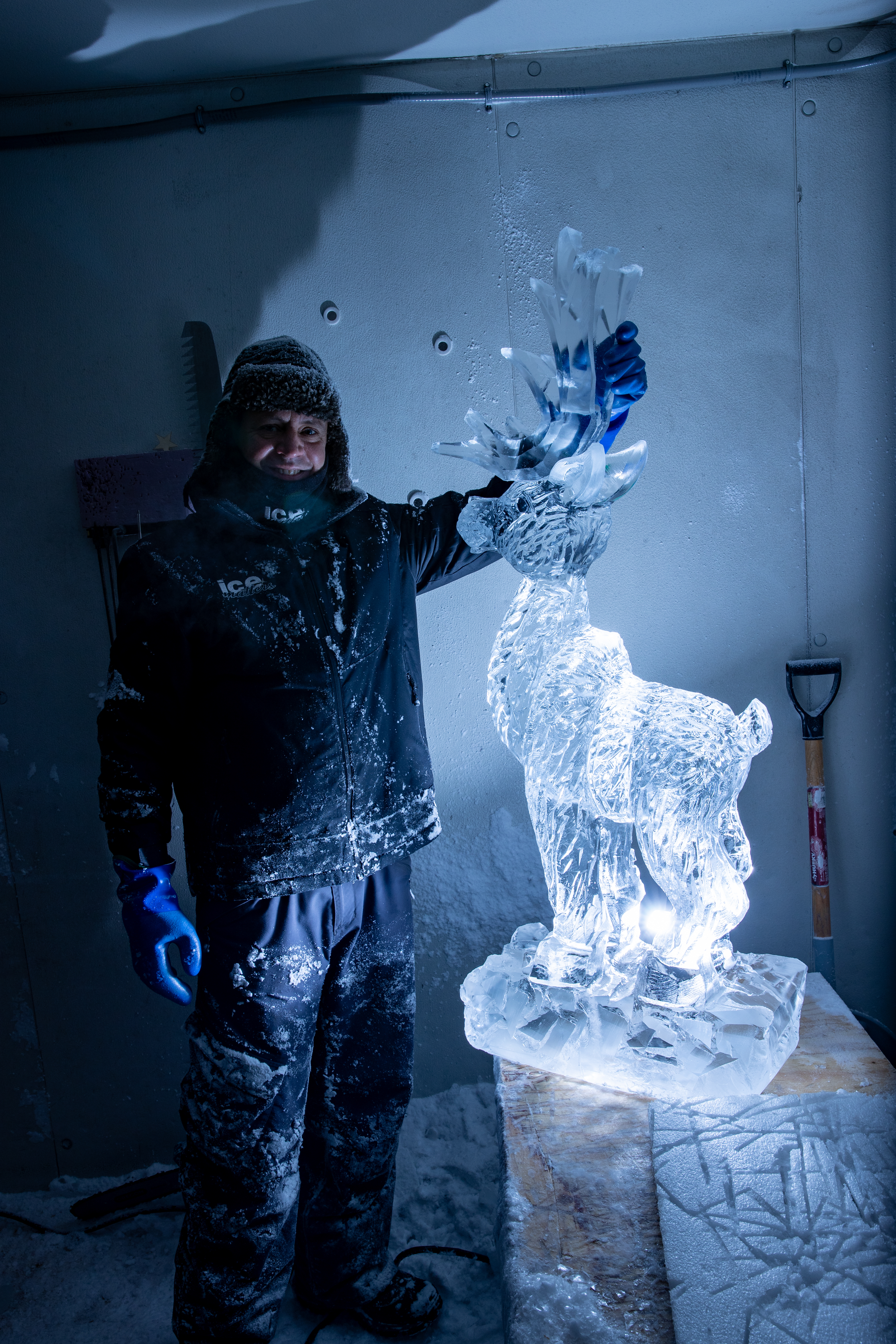
 When most people look at a block of ice, they see something cold, clear, and fleeting. But for ice sculptors, that block holds endless artistic potential.
What sets ice sculpting apart from traditional forms of sculpture, such as marble or wood, is its impermanence. Ice is alive in a sense—constantly shifting, melting, and interacting with its environment. To the sculptor, these traits are not a limitation but a feature, giving the art form a profound immediacy. Every ice sculpture is a performance piece with a ticking clock, destined to disappear.
Sculptors must embrace this brevity. When every second matters, the artist doesn’t have time to overthink—creating a sense of urgency and decisiveness that fuels the creative process.
From Hot Kitchen to
Cold Freezer
Bill Covitz, owner of Ice Matters, began his artistic journey in an unlikely place: the kitchen. After years working as a private chef in France and Belgium, he went searching for a new way to channel his creativity—and found it in ice. Having taken a class called Garde Manger or “cold kitchen” in culinary school, Covitz turned this interest into a new passion by learning skills from professionals in the field, eventually owning his own business.
As an accomplished sculptor, he was Grand Champion at the 2004 National Ice Carving Association’s Nationals, placing first on both days of the 2-day competition. In March of 2006, he placed second in the world at the World Ice Art Championships.
The year 2014 marked Norway’s 200th year of independence, and Covitz replicated buildings in ice for the Norwegian government, as well as created the stage and ice instruments for the celebration. Since 2006, Covitz has returned annually to Norway to continue building functional ice instruments and perform what he calls “ice music”—a fusion of sound, sculpture, and spectacle.
 Tools of the Trade
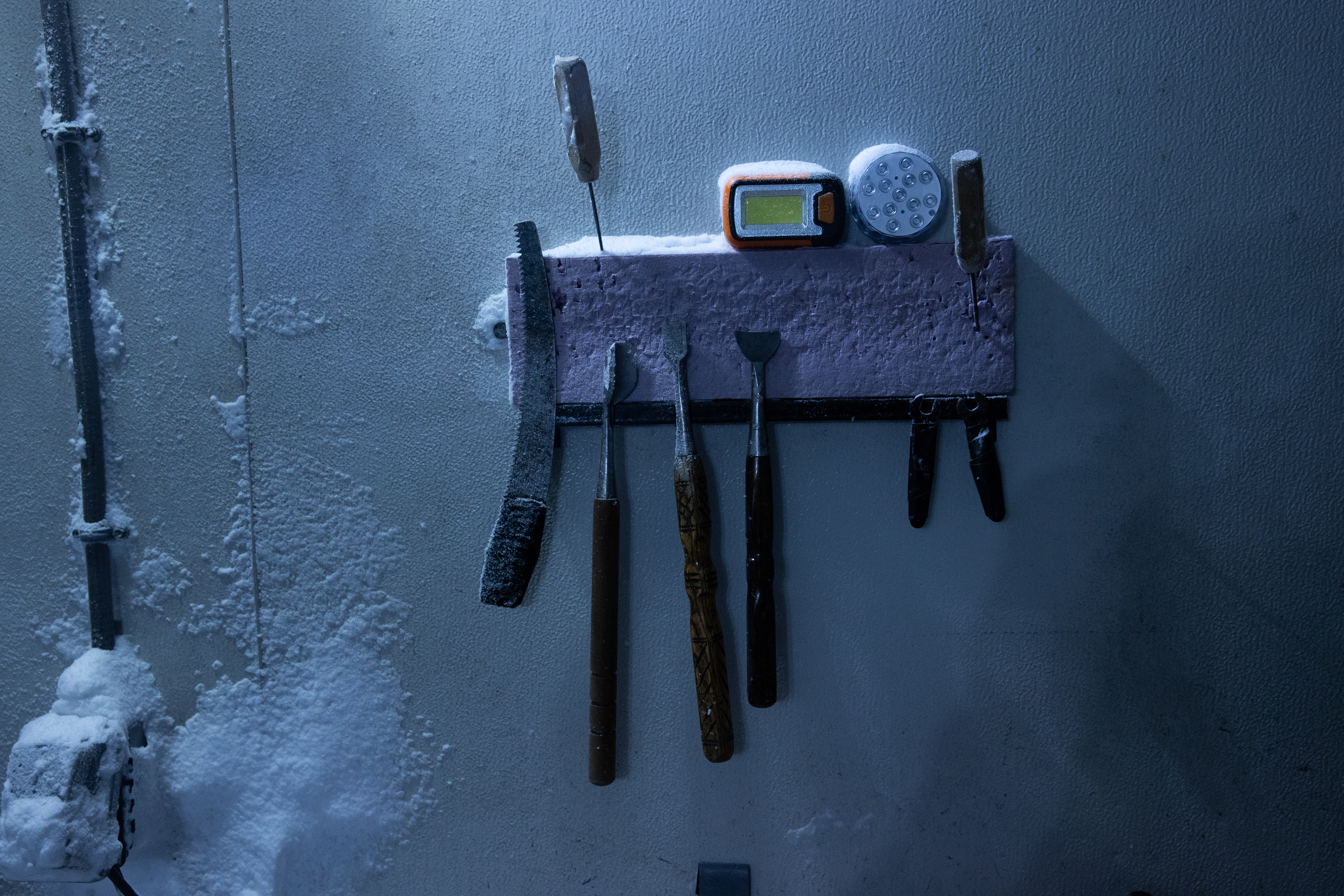
Professional ice sculptors like Bill Covitz use a wide range of tools and can work in climate-controlled studios or directly in the elements. He typically sculpts with 300-pound blocks of specially prepared ice that is frozen from the bottom up. When beginning a sculpture, he draws a template and uses a computerized machine to cut out the general silhouette.
To shape the ice, Covitz uses chainsaws, chisels, rotary carvers, and die grinders to carve the details. At the end of the process, he uses a torch to bring back the clarity. Some of his sculptures take hours, others, days. During competitions or festivals, rules may require a tight timeframe—just 4 to 8 hours from start to finish. “Ice competitions are where the artist gets to play,” says Covitz. “I thrive in the challenge of pushing ice to its limits.”
Where Ice Sculptures Come to Life
 Ice sculpting has long been associated with luxury events, weddings, and culinary showcases. In recent years, though, the art form has broken out of the banquet hall and entered the realm of fine art. Versatility is part of what makes ice sculpting such a compelling and adaptive art form.
“Functional ice sculptures are becoming more popular every year,” says Covitz. Some of his newest requests are used as displays for food or drink. They become the center piece of celebration for weddings, anniversaries, and festivals. LED lights and mixed media elements elevate the impact of the design.
Bill Covitz also has a long, successful history of tools for performance art from ice harvested around the world. One of Covitz’s most exciting challenges has been the creation of functional ice instruments—including violins, xylophones, drums, and guitars. These are not mere props: they are carefully carved from ice with electronics to produce accurate tones, relying on the density, thickness, and purity of the ice to shape their sound. Some instruments are equipped with embedded microphones and electronics to amplify the delicate sound of the ice being played.
Brief but Beautiful
For artists like Bill Covitz, ice is more than a medium—it’s a living, changing partner in the creative process. In a world obsessed with permanence—preserving, archiving, and never forgetting—ice sculpting is a radical act. It asks viewers to appreciate the present moment, to find value in what is brief and beautiful. •
